
What to check and record
- Record the exact food or package involved, including pet food or bird seed stored nearby.
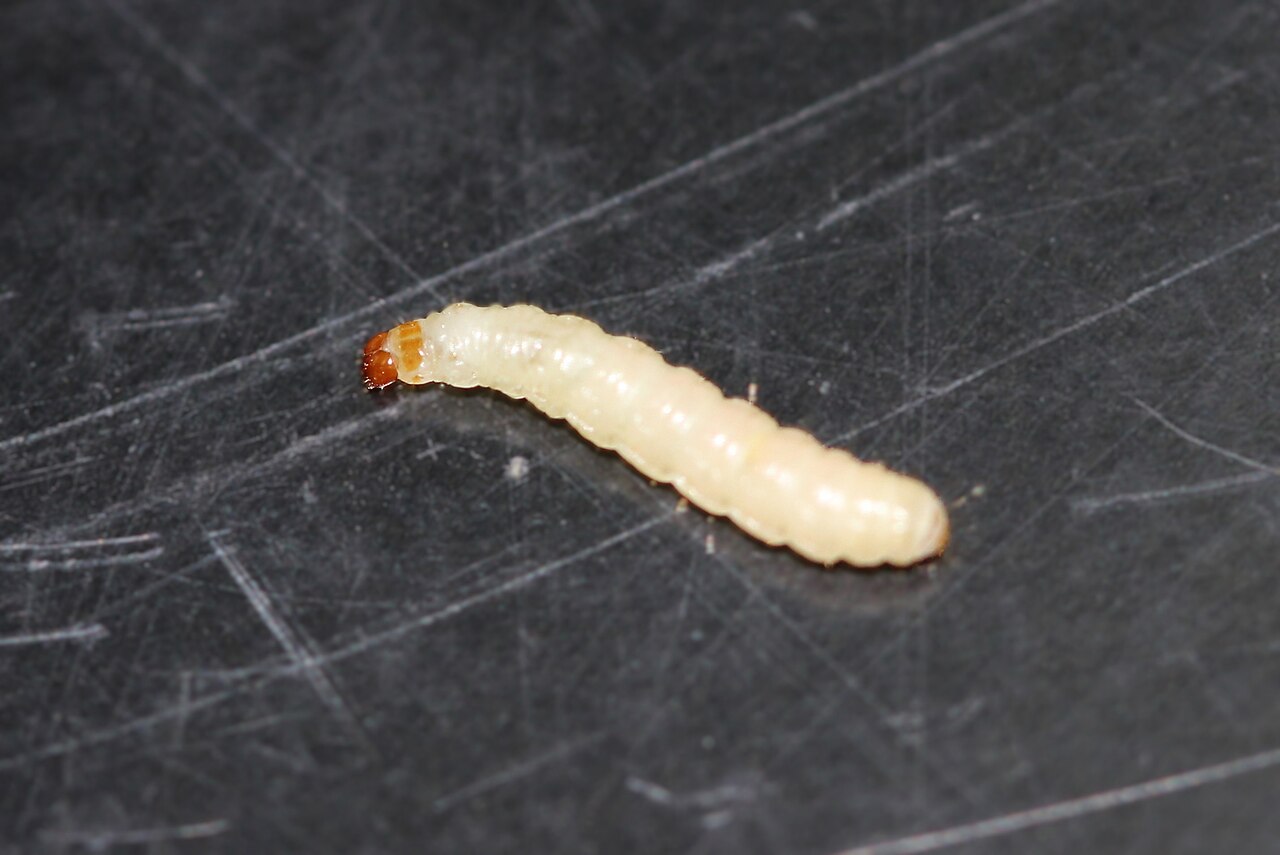
- Photograph webbing and a larva separately; do not rely only on a moth flying around the room.
- Inspect nearby dry goods for physical evidence, keeping suspect packages separate from unaffected food.
Compare the alternatives
Other pantry insects infest stored foods. A larva needs closer identification when no characteristic moth or webbing is present.
A caterpillar on a ceiling is not evidence that it eats the ceiling. Follow the food evidence rather than the final sighting location.
What about pantry moth eggs?
Eggs are small and a poor starting point for a household photo identification. Larvae, webbing, and an associated adult usually provide more context. Keep egg questions on the same evidence record instead of assuming that every grain-like speck is an egg.
Follow the food evidence shelf by shelf
Give each suspect package an entry with its food type, storage location, opening date if known, and the evidence actually seen. Include pet food, bird seed, and infrequently used dry goods in the inventory. Do not call every nearby package infested because one has a larva. Record which products show webbing or insects and which were inspected without a finding.
A wandering larva does not locate the food source
University of Minnesota Extension describes mature Indianmeal moth larvae leaving food to pupate. A ceiling finding therefore belongs in the record, but the source search needs to examine stored products. Keep the larva’s last location and an affected package as separate observations until the evidence connects them.
Preserve information before discarding affected food
Photograph the evidence and package label without spreading contents through the kitchen. Note where the product was stored and follow extension advice for infested food and storage cleanup. Keep the record concise: the food source, physical evidence, and action date matter more than retaining contaminated food as an exhibit. Do not apply insecticides to food.
Check replacement storage against the record
Label the date affected products were removed and the shelves were cleaned. Keep replacement goods protected in appropriate closed containers, and record any subsequent moth or larva separately. Ask whether a new finding suggests an overlooked source rather than automatically blaming the newest package. The inventory makes that conversation more useful than an undated statement that moths keep appearing.
Keep the context with the clue
Record the date, exact location, visible features, and what remains uncertain. Bring the record to a qualified identifier.
Add this finding to your evidence log →Common questions
Why are larvae on the ceiling?
Mature Indianmeal moth larvae may leave the food and wander to pupate. Check stored foods rather than assuming the ceiling is the source.
Does one moth identify the infested package?
No. An adult’s location does not establish which stored food is involved. Look for physical evidence in individual products and maintain a shelf-by-shelf record.
Are tiny grains in flour definitely moth eggs?
No. Pale particles are difficult to identify from a household photograph. Larvae, webbing, and an associated adult provide a more useful basis for an identification request.
Sources reviewed
These references support the identification notes. They do not imply that the authors have reviewed or endorsed this website.