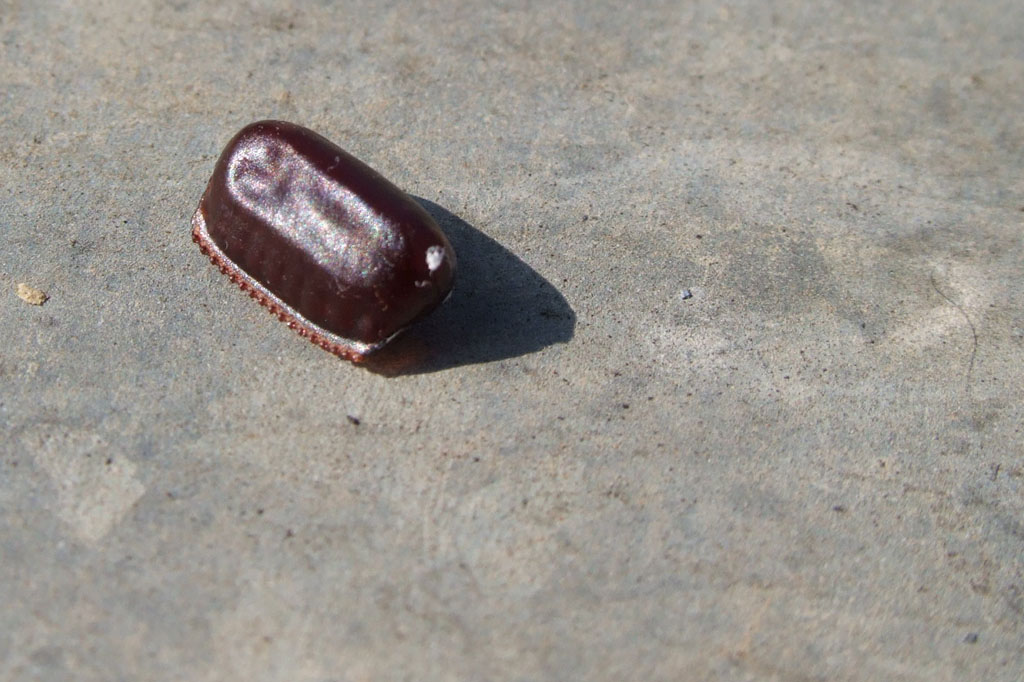

Document the case before deciding what it is
- Photograph the complete case from above and from the side. Add a ruler beside an accessible case without opening or crushing it. The reference photo here has no measurement scale.
- Record whether the case was attached to a female, cemented to a surface, tucked into a crevice, or loose in a box. Those are observations, not a species identification.
- Note the exact location: near a sink or appliance, behind furniture or a wall decoration, in a damp ground-level area, or inside something brought into the home.
- Look for an intact adult or nymph, fecal specks, and more cases. Keep each finding in a separate photo so a specialist can compare them.
- Check accessible edges and crevices. Do not dismantle electrical equipment or move heavy appliances to chase a case.
How common species handle their egg cases
These patterns come from UC IPM, University of Florida IFAS, and University of Minnesota Extension. Size and color overlap, so the attached or deposited position and an identified adult are more useful than color by itself.
| Species | What happens to the case | Useful context |
|---|---|---|
| German cockroach: markings and indoor clues | Female carries the case at the end of her abdomen until close to hatching; a typical case is about 8 mm long. | An intact adult with two dark stripes behind its head is a stronger species clue. Record the kitchen or bathroom hiding place. |
| Brownbanded cockroach: bands and hiding places | Female glues a light brown case to a protected surface, sometimes with several cases together. | Check higher, warm places such as behind wall decorations and beneath furniture. A glued case alone still needs confirmation. |
| American cockroach: size, color, and lookalikes | Female deposits a hardened case in a protected place; it may be glued to a surface. It can darken after deposition. | Record a damp basement or ground-floor location and any actual adult. The photo on this page shows an American cockroach case only. |
| Oriental cockroach: dark body and short wings | Female deposits a dark red-brown case in sheltered debris or a protected place. | Record damp, ground-level conditions and an intact insect if present. Do not decide the species from a dark case alone. |
What the photograph does and does not show
The source file identifies the pictured object as an American cockroach egg capsule. It shows the case shape and ridge, but there is no ruler and it is not a guide to the natural size of every species. German and brownbanded cases may differ. Compare the species table and, where possible, an intact insect found in the same area.
Where an indoor case might be found
UC IPM describes narrow, sheltered hiding places for cockroaches. Brownbanded cases may be glued high behind wall decorations or beneath furniture; American and Oriental cases can be deposited in more protected or damp locations. University of Minnesota Extension also advises checking bags and boxes brought into a home. A case in an incoming box does not prove an established indoor population.
Why a case cannot count a population
A case may be attached to a female, deposited before hatching, or left after young have emerged. One case does not reveal the number of insects elsewhere in a building. Record whether you later find nymphs, adults, or additional cases rather than turning one object into a population estimate.
If the object might be something else
A blurred, brown, capsule-shaped object is not enough to separate a cockroach case from other household material. Keep the original image and note its dimensions and attachment. The nearby insect, the case's full shape, and its location can help a qualified identifier; a cropped color swatch cannot.
Keep the context with the clue
Record the date, exact location, visible features, and what remains uncertain. Bring the record to a qualified identifier.
Add this finding to your evidence log →Common questions
Are cockroach eggs loose or inside a case?
The eggs of the household cockroaches discussed here develop inside an ootheca, or egg case. A female may carry or deposit that case, depending on the species.
Does finding one egg case mean an infestation?
It is a useful finding to document, but one case does not establish how many cockroaches are present or where they are breeding. Look for repeated cases or identified insects and ask a specialist if the situation remains unclear.
Can the case color identify the cockroach species?
No. Case colors can overlap and may change after deposition. Record the case's full shape, size, attachment, location, and any intact cockroach seen nearby.
Can an empty case tell me when it hatched?
A photograph of a case is not a dependable hatch-date record. Keep the date you found it and any associated insects, but do not infer how long a household population has been present.
Should all brown capsules in a box be counted as roach eggs?
No. First establish whether the objects are egg cases. Photograph a representative object with a scale and retain the packaging context instead of treating color and shape as a confirmed count.
Sources reviewed
These references support the identification notes. They do not imply that the authors have reviewed or endorsed this website.