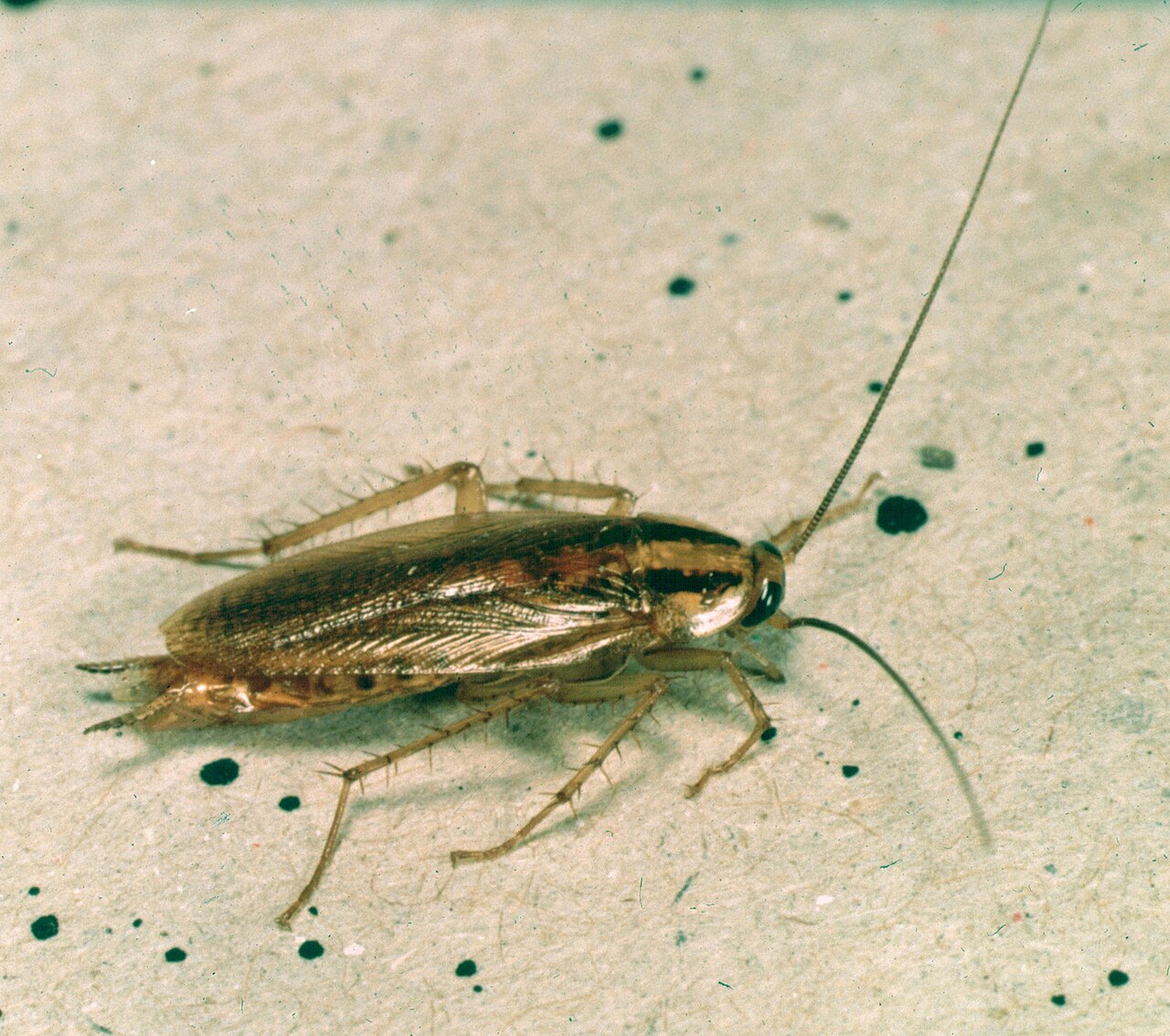

Field comparison: stripes behind the head, not crossbands
UF/IFAS describes adult German cockroaches as 10–15 mm long with two dark parallel marks on the pronotum. That is the shield behind the head. Brownbanded cockroaches instead show contrasting bands across the body.
Clearly visible transverse pale bands call for the brownbanded comparison; a large reddish adult calls for other species. These contradictions help reject a weak match. Two appropriate stripes still do not separate every close relative: the similar Asian cockroach is a reason to include locality and seek confirmation.
Reference: UF/IFAS: German Cockroach · Penn State Extension: Brown-banded Cockroaches
What to check and record
- Photograph the shield immediately behind the head, not just the wings.
- Write down the room, exact hiding place, and whether the insect was found indoors or outside.
- Keep nymph, adult, egg-case, and droppings observations separate in your notes; a species identification is strongest when an insect is available.
Compare the alternatives
Brownbanded cockroaches have bands across the body rather than the German adult’s paired lengthwise markings.
Asian cockroaches can closely resemble German cockroaches. A casual photograph may not separate them.
Check the shield behind the head
The paired markings used in this comparison are on the pronotum, the shield immediately behind the head. Frame that area clearly without cutting off the antennae. An image dominated by the wings may hide the feature that matters. If the insect is a nymph, compare an immature reference instead of expecting every adult feature to be present.
Similar-looking insects need regional context
UF/IFAS flags the Asian cockroach as a close lookalike. Give the identifier your state, whether the insect was indoors or outdoors, and any flight you actually observed. A locality narrows the investigation but cannot make an unclear photograph decisive. Do not interpret two stripes as automatic confirmation when the comparison requires a practiced examination.
Reference: UF/IFAS: German Cockroach
Organize a cabinet-level inspection brief
Draw a simple kitchen or bathroom plan and label actual sightings. Include an appliance edge, cabinet corner, or accessible pipe opening only when evidence was observed there. Mark leaks separately. The map helps an inspector distinguish a cluster from scattered reports, and it gives later observations consistent names. Do not pull out heavy appliances or open powered equipment to fill gaps in the map.
Make follow-up observations comparable
Record the date of professional work and keep the service instructions. Use the same locations and descriptions for later sightings so a change can be evaluated. Ask how identified insects and any professional monitoring will be reviewed. One quiet evening or one new insect is not a complete evaluation of a management program; keep observations and the service assessment connected.
Keep the context with the clue
Record the date, exact location, visible features, and what remains uncertain. Bring the record to a qualified identifier.
Add this finding to your evidence log →Common questions
Are the stripes on the wings?
The key paired stripes are on the shield behind the head, called the pronotum. Try to photograph that area clearly.
Does cleanliness rule them out?
No. A finding should be investigated on its evidence. Avoid assigning blame based on an insect sighting.
Does one sighting tell me how long they have been present?
No. A sighting date is the first date you observed the insect, not necessarily the introduction date. Avoid assigning a population age from a single adult or nymph.
What should an apartment report include?
Include the room, exact location, date, photograph, and whether an identifier confirmed the species. Add known maintenance concerns as separate observations and request coordinated inspection and follow-up.
Sources reviewed
These references support the identification notes. They do not imply that the authors have reviewed or endorsed this website.