FIELD JOURNALCockroach observations
Why cockroaches come out at night—and what to record
Turn a nighttime cockroach sighting into a useful inspection record without guessing the size of an infestation.
IN BRIEF
Cockroaches commonly shelter in protected areas and forage in darkness. The timing of a sighting supports an observation record but cannot identify the species or population.
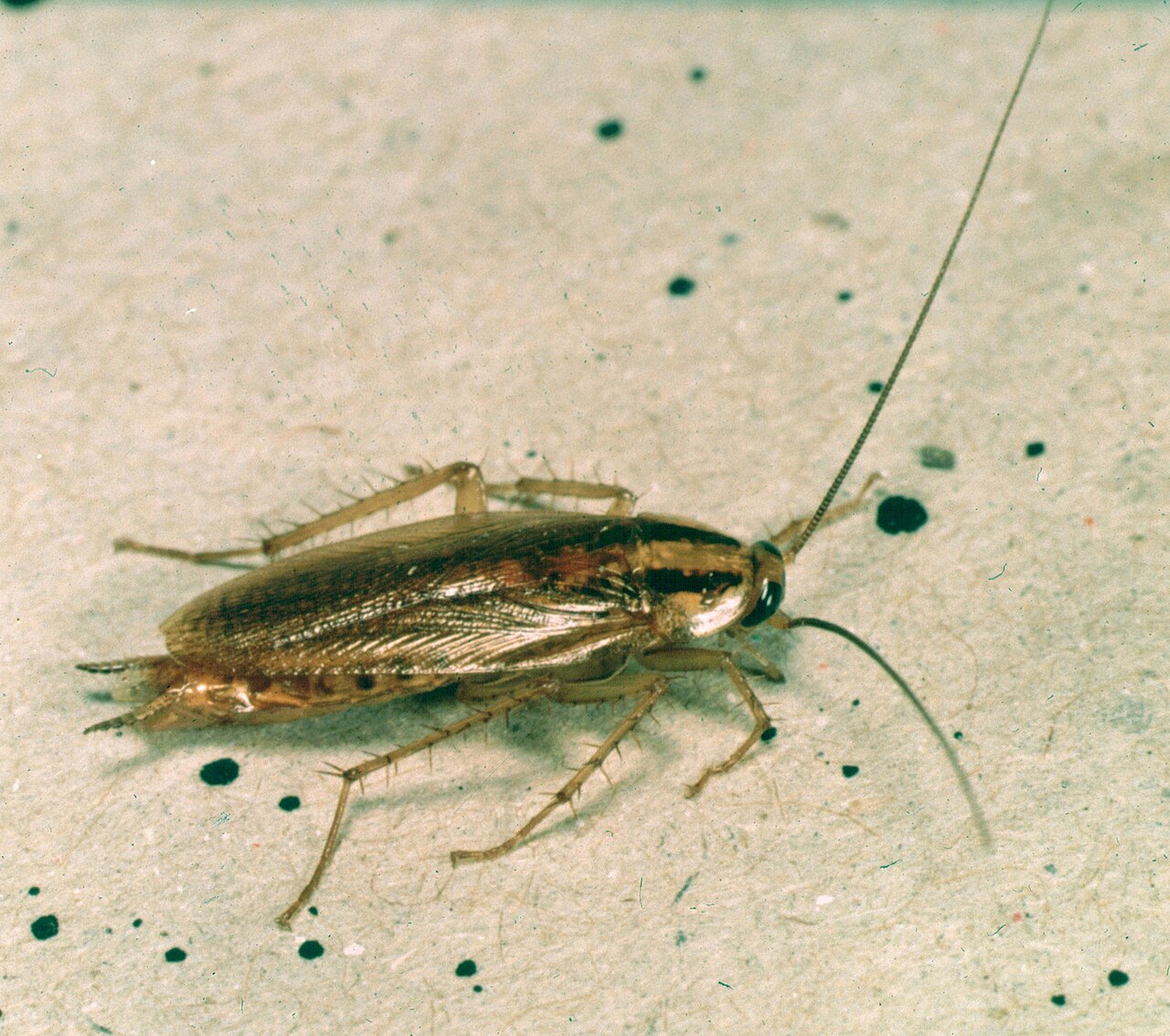

A light comes on and a brown insect disappears under a cabinet. The timing is a clue, but it does not tell you which species is present or how many are hidden. Start by recording the sighting rather than assigning a population estimate.
Why darkness fits the pattern
Cockroaches commonly shelter in protected places and forage when the surroundings are quiet or dark. UF/IFAS describes American cockroaches resting in daytime hiding places near suitable moisture. That behavior helps explain a nighttime encounter. It does not mean that every fast insect seen after dark is a cockroach.
Use the cockroach species guides to compare an actual specimen. If it disappeared before you could see the body, “unidentified insect” is an accurate entry in your notes.
Turn repeat sightings into a useful pattern
A consistent record helps an inspector compare locations. Use the same labels each time rather than calling every sighting “in the kitchen.” The UF/IFAS American cockroach reference describes daytime sheltering behavior, but a clock time cannot identify a species or measure an infestation.
| Record field | Example of useful wording | Avoid assuming |
|---|---|---|
| Time and lighting | “10:15 p.m.; light just switched on” | Every insect seen at night is a cockroach |
| Location | “Floor at left edge of dishwasher” | The insect lives inside that appliance |
| Number and stage | “One insect seen; stage unknown” | One visible insect means a particular hidden population |
| Movement | “Ran toward a cabinet gap” | The gap leads to a nest |
| Other evidence | “Separate photo of a case-like object” | Both findings are the same species |
An illustrative row is a model for your wording, not a threshold that triggers a particular treatment. Record unknown details honestly; a fleeting encounter may have no reliable size or color information.
What a monitoring discussion should cover
If a professional recommends monitoring, ask where devices should go, how they will be labeled, when to check them, and what information to report. Follow the device instructions and consider access by children and pets. A device moved between locations without a note makes later comparisons harder.
Ask how the result will be interpreted. Counts from different positions or unequal observation periods cannot be compared as though the conditions were identical. A quiet observation period may be useful, but it is not a whole-building guarantee.
Keep prevention observations specific
Record an actual leak, food spill, damaged screen, or gap that you can see safely. These are maintenance observations to discuss alongside identification. Avoid assigning a household hygiene judgment from a single insect. In shared housing, use the apartment reporting template so the person coordinating work receives the locations and evidence together.
Resolve the species question before escalating assumptions
A clear image may support a German cockroach, American cockroach, or Oriental cockroach comparison. If the body is missing or blurred, ask for identification help. A daytime sighting is worth recording in exactly the same factual way; it does not independently establish a severe infestation.
Common questions
Does a nighttime sighting reveal how many cockroaches are hidden?
No. Record the number actually seen and the exact location. A population estimate needs more evidence than one encounter.
What is the most useful follow-up photograph?
An intact view showing the body, head shield, and antennae is more useful for identification than a blurred image of movement.
Does seeing a cockroach in daylight prove a severe infestation?
Timing alone cannot establish the population or severity. Record the specimen, exact location and other evidence, then seek an assessment when the finding is repeated or unresolved.
What should I ask about a monitoring plan?
Ask for device locations, labels, the observation period, safe placement instructions and how results will be interpreted. Record any movement or replacement of a device.
Sources and further reading
The observation checklists are our editorial organization of the topic. Linked organizations have not reviewed or endorsed this article.