FIELD JOURNALField methods
Suspected insect eggs: what a household photo can establish
Avoid turning every pale speck into an egg by recording structure, location, and associated insects.
IN BRIEF
Describe the structure, location, and associated insects before naming suspected eggs. Tiny objects in a household photograph may require magnification or a specimen for confirmation.
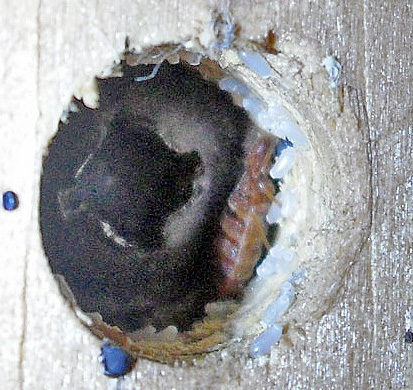

Tiny pale objects often inspire an immediate egg identification. A household photograph may not contain enough detail to support one. Start by describing the objects and their position, then look for associated evidence without disturbing a potentially hazardous or inaccessible area.
Keep the location exact
“On the mattress seam” and “on the bedroom floor” are different observations. Record the material and any nearby insect separately. If the object was moved before the photograph, retain the original finding location in your notes.
A familiar room does not identify an egg. Food crumbs, fibers, dust, and other material can remain possibilities when the image lacks detail.
Build a description before choosing a species page
Use visible structure to decide what to ask an identifier. EPA’s bed bug life-cycle page describes bed bug eggs, while the UF/IFAS German cockroach reference describes eggs enclosed in a case. They illustrate why an egg-sized speck and an egg capsule should not be treated as interchangeable findings.
| What the image shows | Useful wording | Missing question |
|---|---|---|
| Separate small objects | “Individual pale objects on this surface” | Are they biological material or debris? |
| Objects clustered together | “Cluster; attachment unclear” | Are the objects connected or merely adjacent? |
| A capsule-like body | “Case-like object with this visible edge” | Does the intact structure support an egg-case identification? |
| Fuzzy or irregular fragments | “Fragments; no clear boundary” | Is there enough detail to identify anything? |
| A nearby insect | Separate labeled specimen image | Is it related to the suspected eggs? |
An associated insect can be useful, but proximity alone does not establish parentage or species. Keep a wide view that shows the relationship without staging the objects together.
Identify the one missing detail
Ask whether the service needs a closer image, a different angle, scale, or a sample. A better question is “Can you see a feature that distinguishes this from debris?” rather than “Which pest must have laid these?” The second wording assumes the conclusion before the evidence is assessed.
Do not apply liquid, crush the object or wait for it to hatch in an open living space as a home test. If a physical specimen is useful, follow the recipient’s instructions for that material. Do not sample suspected waste, enter a concealed cavity or handle an unknown animal to improve the submission.
Keep the outcome at the supported level
There are several useful answers: identified eggs, a likely insect group, non-insect material, or insufficient detail. Record the answer and who provided it. An inconclusive result should name the next useful observation when possible, rather than encourage repeated photo matching to the same unclear speck.
Use the bed bug egg guide, carpet beetle egg guide, and cockroach case guide as focused comparisons after the structure is visible. Their different evidence requirements help explain why location and color alone are insufficient.
Common questions
Are all small pale objects insect eggs?
No. Dust, fibers, food debris, and other material can look similar in an insufficient image.
Should I collect a sample before contacting a lab?
Ask the service what it accepts and how to submit it first. Do not disturb hazardous material or handle an unsafe animal for a sample.
Does an insect beside suspected eggs prove it laid them?
No. Photograph the insect separately and preserve the location context. An identifier must assess whether the observations are related.
Is an inconclusive identification a useful result?
Yes, if it explains what cannot be seen and what additional view or sample would help. Keep the finding provisional rather than choosing the closest image match.
Sources and further reading
The observation checklists are our editorial organization of the topic. Linked organizations have not reviewed or endorsed this article.