FIELD JOURNALRoom checklists
Carpet beetles in a closet: trace the material, not just the room
A closet inspection record for larvae, shed skins, and fabric damage that avoids guessing from an adult beetle.
IN BRIEF
Record the actual item, its material, and whether you found a larva, skin, adult, or damage. An adult beetle elsewhere in the closet does not establish the source of a hole.
.jpg)
Finding an adult beetle in a closet and finding a larva on a damaged garment are different pieces of evidence. Begin with the exact object and life stage. The purpose of a closet check is to locate relevant material, not to label every hole as pest damage.
Inspect by item and material
UC IPM’s carpet beetle reference distinguishes the fabric-feeding larvae from pollen-feeding adults. This makes the association between a larva and a particular item more useful than an adult sighting alone.
Create an item inventory before rearranging the closet:
| Item | Material from label | Actual evidence | Next decision |
|---|---|---|---|
| Garment or blanket | Record the stated fiber; unknown is acceptable | Larva, skin, damage, or none visible | Identification or care advice needed? |
| Stored accessory | Describe fur, feathers, felt, or other material if known | Describe the object separately from any damage | Can it be examined without damage? |
| Shelf or floor edge | Surface and nearby items | Location of each specimen or fragment | Is there a specific item association? |
These are record headings, not a list of items that must be discarded. Keep apparently unaffected and unexamined belongings distinct from items with evidence.
Compare the life stage
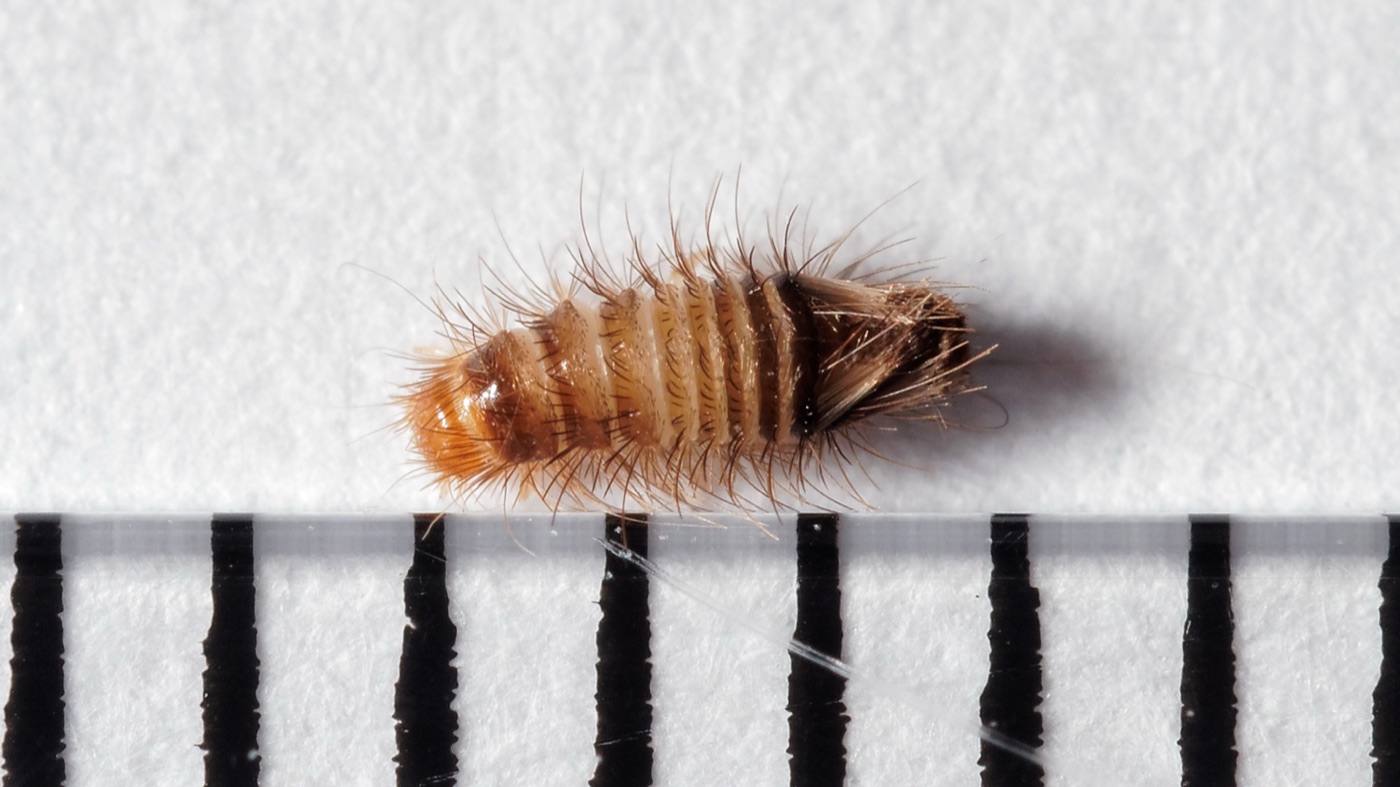
The larva guide describes bristly larvae and skins. Black carpet beetle adults look very different from their larvae. Read the reference caption before comparing: species and life stage are both relevant.
A photograph of an adult near a closet window does not identify the source of fabric damage. Keep that sighting as a separate entry until the connection is supported.
Record the pattern of damage
Photograph the whole item and a close-up of the affected area. Note whether damage was present before storage, if you know. If the item has not been inspected in months, say when it was last checked rather than assigning a recent date to the holes.
Ordinary wear and other fabric pests remain possible explanations. Do not apply a treatment solely because the damage resembles a reference image.
Turn cleaning into a traceable action
Once identification and suitable item care are clear, record what was cleaned, when, and where it was stored afterward. Follow the manufacturer’s instructions or ask a textile-care professional for valuable or delicate material. A household article cannot prescribe one heat, washing, or freezing process for every fiber, lining and construction.
Photograph existing damage before cleaning so later checks do not mistake old holes for new ones. If an item has no label, say so rather than choosing a treatment from its appearance. Keep cleaning and any pest treatment as separate recorded actions.
Make the next check comparable
Use the same item labels and photograph the same portion of the fabric. Record a newly found live larva separately from old damage or skins that were missed initially. A finding on a different item deserves its own entry; it does not establish that every garment has the same problem.
If the source remains unclear, give the professional the inventory and ask which materials or inaccessible spaces warrant further inspection. The shed-skin workflow can help when most of the evidence is empty, bristly objects. For suspected bed bug evidence on nearby furniture, use the carpet beetle versus bed bug comparison before merging the two concerns.
Common questions
Does an adult beetle identify which garment was damaged?
No. Keep the adult sighting separate from larvae and damage found on a specific item.
Should I treat every hole as carpet beetle damage?
No. Wear and other causes remain possible. A specimen and associated evidence improve the assessment.
Should I wash every item on the hottest setting?
No single process is appropriate for every textile. Follow the care label and obtain item-specific advice for delicate or valuable belongings after the finding is identified.
How do I avoid counting old holes as new damage?
Photograph the item before cleaning or storage, use a consistent item label, and compare the same area later. Record newly observed larvae separately from existing damage.
Sources and further reading
The observation checklists are our editorial organization of the topic. Linked organizations have not reviewed or endorsed this article.