.jpg)
Field comparison: bristly larvae and silk-associated larvae
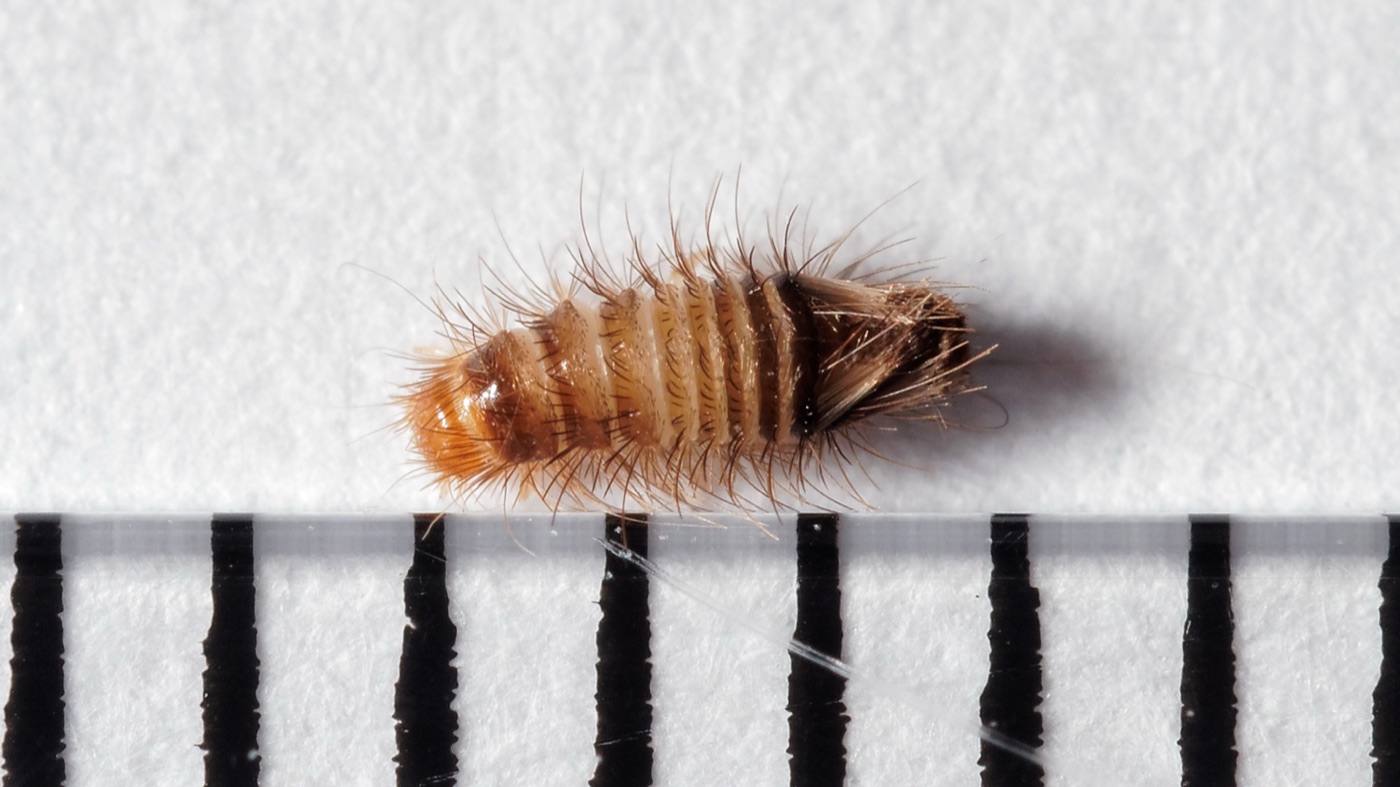
Maryland Extension describes varied carpet beetle larvae as hairy and teardrop-shaped. Black carpet beetle larvae are more carrot-shaped, about 3–7 mm long, with golden-brown hairs and longer hairs at the rear. One larval photograph cannot represent both forms.
Clothes moths provide a useful alternative when silk is present: webbing clothes moth larvae use silk tubes on feeding surfaces, while casemaking larvae carry a case. A bristly empty skin and a silken case are therefore different clues. Compare the structure and actual larva, not just holes in fabric.
Reference: University of Maryland Extension: Carpet Beetles · University of Maryland Extension: Clothes Moths
Look where larvae feed
- Check wool rugs, stored clothing, lint buildup, and quiet corners where animal-based fibers collect.
- Compare a suspected larva with any cast skins and the pattern of fabric damage.
- A single adult beetle near a window does not by itself establish a fabric infestation.
What else could it be?
Clothes moth larvae can also damage fabric. UC IPM notes that carpet beetle cast skins and a lack of webbing are useful distinguishing clues.
Photos alone may not identify the exact carpet beetle species.
What about carpet beetle poop?
Tiny debris alone is a weak identification clue. Record it without touching it and look for an actual larva, a cast skin, or related feeding damage. This guide groups that question with larval evidence because a separate pellet-only identification would imply more certainty than the finding supports.
Look at the larva rather than the room name
Keep the bristles, body outline, and rear end visible in a close-up. The photograph on this page is one species’ larva; carpet beetles do not all look identical. A larva on bedding is not automatically a bed bug, and a larva on carpet is not automatically a carpet beetle. Use the actual body before assigning a name from the surface.
Build an item-level damage record
Label affected objects separately: a wool scarf, rug edge, feather-filled item, or storage box. Photograph the whole object, damage, and any insect found on it. Keep an item with no visible damage distinct from one with holes. This lets a specialist compare the feeding evidence with the specimen without assuming every textile in the room has the same problem.
Distinguish a skin from a living larva
A cast skin can retain a larval outline and bristles after the insect has left. Record whether movement was actually observed and whether the object appears hollow, without crushing it to check. A skin is useful evidence but does not count as a live insect seen today. Keep later observations dated so old remains are not repeatedly counted as new activity.
Plan the next check around likely material
Use the confirmed identification to decide which stored items or quiet edges need attention. Note gaps in access, such as a heavy cabinet you could not move safely. Ask what cleaning or item-care advice fits the material, especially for valuable textiles. A source search and a careful inventory are more useful than treating an entire room based on one unidentified bristly object.
Keep the context with the clue
Record the date, exact location, visible features, and what remains uncertain. Bring the record to a qualified identifier.
Add this finding to your evidence log →Common questions
Is a cast skin the same as a live larva?
No. A cast skin is the empty outer covering left as a larva grows. It can still help you locate a feeding area when found with fabric damage or live larvae.
Are the insects near a window necessarily the ones damaging clothes?
Not necessarily. Link an adult finding and fabric damage only after considering larvae, skins, and the affected material. The window may simply be where an adult was noticed.
Does finding an empty skin prove live larvae are still feeding?
No. It records a previous life stage. Note its location and compare with live larvae, new damage, or later findings rather than assigning a current population from skins alone.
Sources reviewed
These references support the identification notes. They do not imply that the authors have reviewed or endorsed this website.