FIELD JOURNALRoom checklists
Pantry moth larvae on the ceiling: follow the food evidence
Use a shelf-by-shelf record to investigate a wandering larva without assuming the ceiling is its food source.
IN BRIEF
Indianmeal moth larvae may wander from stored food before pupating. Document the ceiling sighting, then follow actual larvae or webbing in accessible food storage to investigate the source.
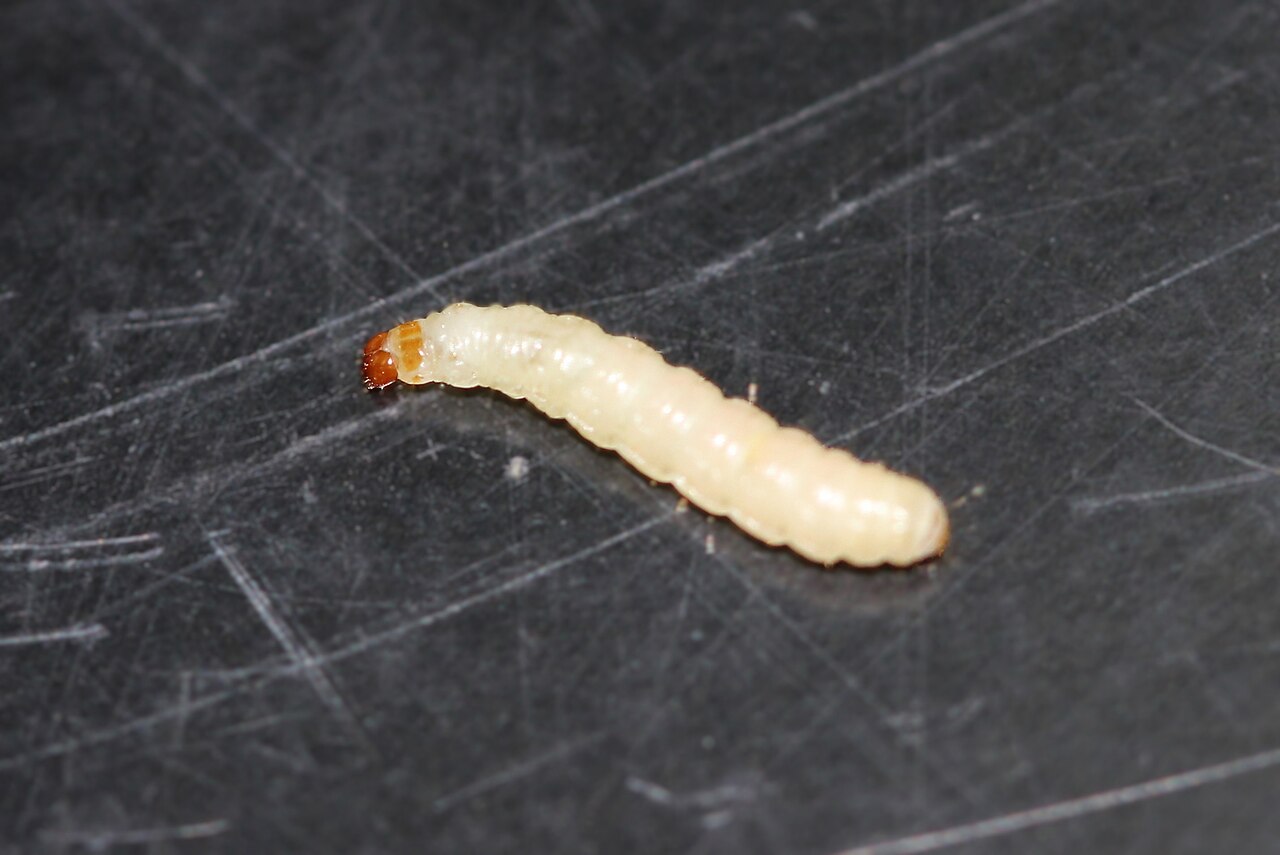

A pale caterpillar near the ceiling can be a pantry-pest clue even when it is several feet from stored food. University extension guidance explains that mature Indianmeal moth larvae may wander away from food before pupating. The sighting location and the feeding source therefore need separate entries in your record.
First, keep the identification provisional
Take a photograph without climbing onto an unstable surface. Record the room, approximate size, and whether you also saw adult moths. Use the pantry moth larva guide to compare the insect. A pale larva alone does not rule out other possibilities.
Separate the sighting place from the package search
Minnesota Extension’s pantry-pest reference describes caterpillars on walls and ceilings as a possible pantry-pest sign. The practical next task is to find direct food evidence, not to treat the ceiling as the source.
Use two records: C1 for the ceiling sighting, and a separate P-number for each package with evidence. This keeps a distant larva from being assigned to whichever package you happened to open first.
| Package record | What to write |
|---|---|
| Identity | Product, package or container, storage shelf |
| Timing | Purchase or opening date if actually known |
| Evidence | Larvae, webbing, adult insect, or uncertain material |
| Photograph | Package overview and relevant detail |
| Outcome | Removed, assessed, or still unresolved; include date |
The inventory can include dry foods, pet food and bird seed wherever they are stored. Keep a package with no visible finding in a different category from one you have not checked. Do not transfer an unresolved product into a clean container merely to make the shelf look organized.
Decide what to do with an affected product
Maryland Extension’s pantry guidance recommends discarding infested food and cleaning the storage area. Record the actual product removed and the date. Do not taste food to assess an insect concern, and do not apply insecticide to food.
Keep any packaging details you may need for a product inquiry, but avoid claiming the product was affected before purchase unless evidence supports that timing. A purchase date and a discovery date do not establish when the problem began.
Build a follow-up that can locate an overlooked source
After appropriate removal and cleaning, use the same storage labels for subsequent checks. Record an adult moth, a larva and food webbing as different observations. Another insect on a ceiling should prompt a review of the source record, not an automatic conclusion that every newly purchased item is affected.
If sightings continue, ask which overlooked products or storage areas should be assessed and whether the insect identification is secure. Show the package inventory along with the original larva image. A professional can use that sequence more effectively than a statement that the entire kitchen was cleaned.
Use the storage prevention worksheet after the active source question is addressed. It helps keep replacement products traceable without presenting routine storage as a complete solution to an unresolved infestation.
Common questions
Does a larva on the ceiling mean it eats the ceiling?
No. Mature pantry moth larvae can leave their food before pupating. The sighting location may be separate from the food source.
Should I spray food cupboards before finding the source?
Do not apply insecticides to food. Source identification, appropriate disposal, and storage-area cleaning are central to extension guidance.
Should I empty every package into a new container immediately?
Keep unresolved products separate and record them first. Transferring contents can remove packaging context and does not establish that the food is unaffected.
Does the purchase date show when a product became infested?
No. Keep purchase, opening and discovery dates separate. They describe the timeline you know without proving when or where an infestation began.
Sources and further reading
- University of Minnesota Extension: Pantry Pests ↗
- University of Maryland Extension: Kitchen and Pantry Pests ↗
The observation checklists are our editorial organization of the topic. Linked organizations have not reviewed or endorsed this article.