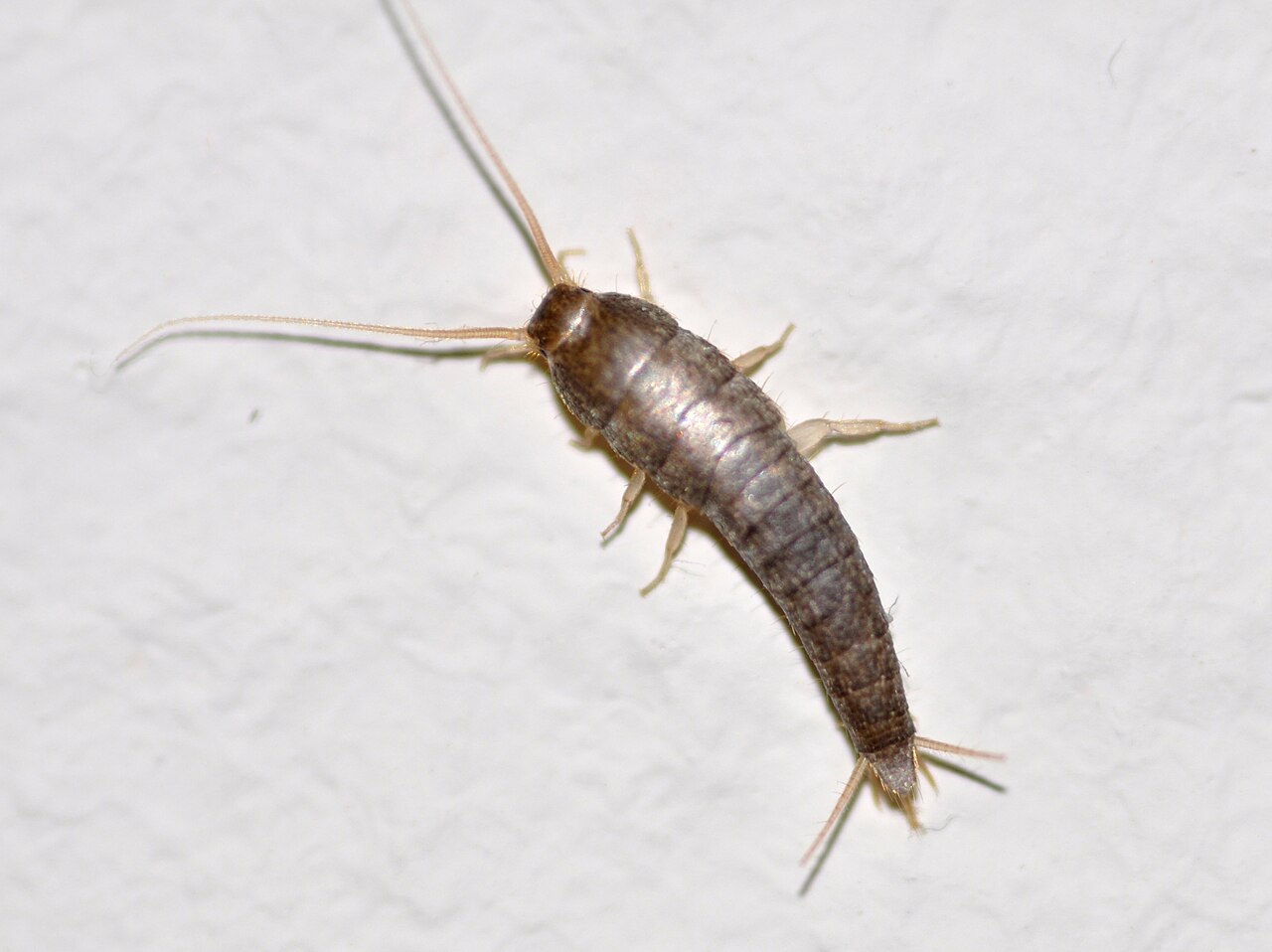

What to check and record
- Try to include all three tail appendages in the photograph; note if any appear broken.
- Record moisture, nearby paper storage, and repeated sightings as separate observations.
- If you suspect eggs, photograph the undisturbed area and any actual insects rather than labeling every pale speck.
Compare the alternatives
Silverfish tend to favor cooler damp places; firebrats favor warmer sites. That distinction supports, but does not replace, identification.
A cockroach nymph has a different outline and lacks the silverfish’s three long tail filaments.
Eggs are a weak starting point
Virginia Tech describes eggs deposited in cracks and crevices. In a home photograph, tiny material in a crack may not show enough features to identify. Start an evidence record with an intact insect when available, and keep uncertain egg observations explicitly marked uncertain.
Photograph the tapered end carefully
The long tail appendages are useful comparison features, but one or more may be broken or hidden. Record what is visible rather than declaring that a two-tailed image cannot be a silverfish. Keep the antennae and body in the same frame. A photograph of only a fast-moving silver streak provides less information than a still, complete specimen.
Compare the storage conditions
Maryland Extension discusses silverfish and firebrats together and distinguishes their environmental preferences. Record the room, visible condensation, heat source, and stored paper or fabric. These details support an identification; they do not prove that an insect caused nearby damage. Note whether the insect was actually observed on the affected object.
Reference: University of Maryland Extension: Silverfish and Firebrats
Document paper or textile damage without enlarging it
Photograph the entire item and the affected area, and note when the damage was first noticed. Keep brittle paper, water staining, and insect observations separate. If the item is valuable, consult an appropriate conservator or professional before cleaning or applying products. A household pest comparison cannot determine which restoration method is safe for a book or textile.
Keep suspected eggs as a secondary clue
If pale material is present in a crevice, photograph it but prioritize an intact insect for identification. Record whether a professional confirmed the object rather than quietly replacing “suspected eggs” with “eggs” in later notes. The most useful follow-up compares actual insects, moisture observations, and affected items over time.
Keep the context with the clue
Record the date, exact location, visible features, and what remains uncertain. Bring the record to a qualified identifier.
Add this finding to your evidence log →Common questions
Can I identify silverfish eggs with the naked eye?
A pale speck alone is not reliable evidence. A specialist may need magnification and an associated insect or specimen.
Do silverfish have wings?
Silverfish are wingless. If the photographed insect has clear developed wings, that feature should prompt a different comparison rather than being ignored because the color looks right.
Can one silverfish prove the whole home is damp?
No. A sighting does not measure building-wide moisture. Record actual condensation, leaks, or professional measurements as separate evidence.
Sources reviewed
These references support the identification notes. They do not imply that the authors have reviewed or endorsed this website.