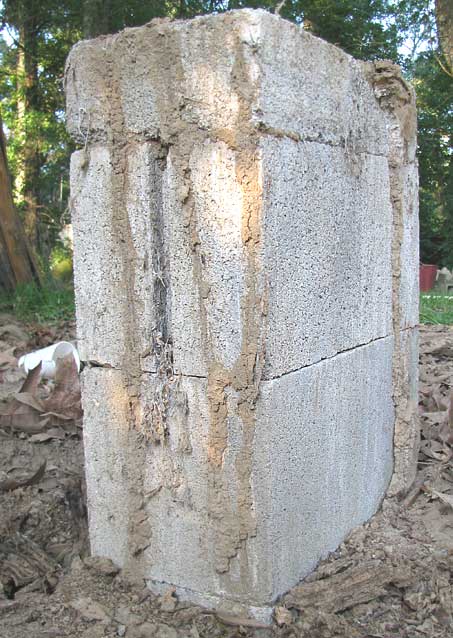

Field comparison: a raised shelter tube or a surface mark?
A termite shelter tube is a built earthen structure, rather than simply a brown discoloration. Mississippi State describes visible mud tubes as a reason for professional inspection even when live termites are not seen.
Look for a continuous raised route and its relationship to a foundation or wood. A paint stain or loose smear without a discernible structure is weaker evidence. Photograph the side profile if accessible. An empty-looking break does not contradict all possible termite activity elsewhere in the building.
Reference: Mississippi State Extension: Signs of Termite Infestation
Check the location and pattern
- Look along foundation walls, masonry, and places where wood meets soil.
- Record where the tube begins and ends. Some tubes connect soil to wood; others are exploratory or return toward the soil.
- Take a clear photo with a size reference and note whether you see more than one tube.
What a tube does not prove
A tube suggests termite activity may have occurred, but a photo cannot show how much hidden damage is present.
Mud or soil on a wall is not automatically a termite tube. Its enclosed, continuous shape and connection to nearby surfaces matter.
Trace only the visible route
Photograph where the raised material begins and ends on an accessible surface. Include the surrounding foundation, wall joint, or timber, then take a close-up. If the route disappears behind siding or into a crack, record that boundary as unknown. Do not extrapolate a hidden path through the building or enter a crawlspace without safe access just to complete the photograph.
What the tube suggests
Subterranean termites use earthen shelter tubes to reach wood. A convincing tube is therefore a reason to request a termite inspection, but its appearance cannot measure concealed feeding damage. Drywood termites have a different relationship with wood and do not depend on a soil-to-wood tube. Identify the evidence before assuming that all termite treatments address the same problem.
Reference: UC IPM: Subterranean and Other Termites
Do not turn a damaged tube into a clearance result
A broken or apparently empty section provides only a view of that section at that moment. Photograph an existing break and tell the inspector how it happened. Avoid making your own destructive test and treating a lack of visible insects as an all-clear. Also record previous pest work: an old photograph or dated service report may explain a feature that seems newly discovered.
Separate maintenance from the pest finding
Record soil contact, leaks, stored wood, or an obstructed inspection area as individual maintenance observations. Ask the inspector which conditions affect access or future risk and which demonstrate insects now. A damp corner deserves attention, but it does not identify the builder of a mark. Keep any proposed building repairs and pest treatment findings together without assuming one automatically substitutes for the other.
Keep the context with the clue
Record the date, exact location, visible features, and what remains uncertain. Bring the record to a qualified identifier.
Add this finding to your evidence log →Common questions
Should I break open a mud tube?
Photograph its full route first. Breaking a tube can disturb evidence without revealing the extent of any hidden activity; a professional can decide how to inspect it.
Can I identify a mud tube from a streak on paint?
A flat discoloration is different from an identifiable earthen structure. A wider photo and a side view can help show relief, but an uncertain mark still needs examination. Do not call every brown line termite activity.
Does removing a tube remove the colony?
No. A visible tube is only part of the evidence, and removing it cannot demonstrate that concealed termites are gone. Have the structure assessed and retain photographs from before any removal.
Sources reviewed
These references support the identification notes. They do not imply that the authors have reviewed or endorsed this website.