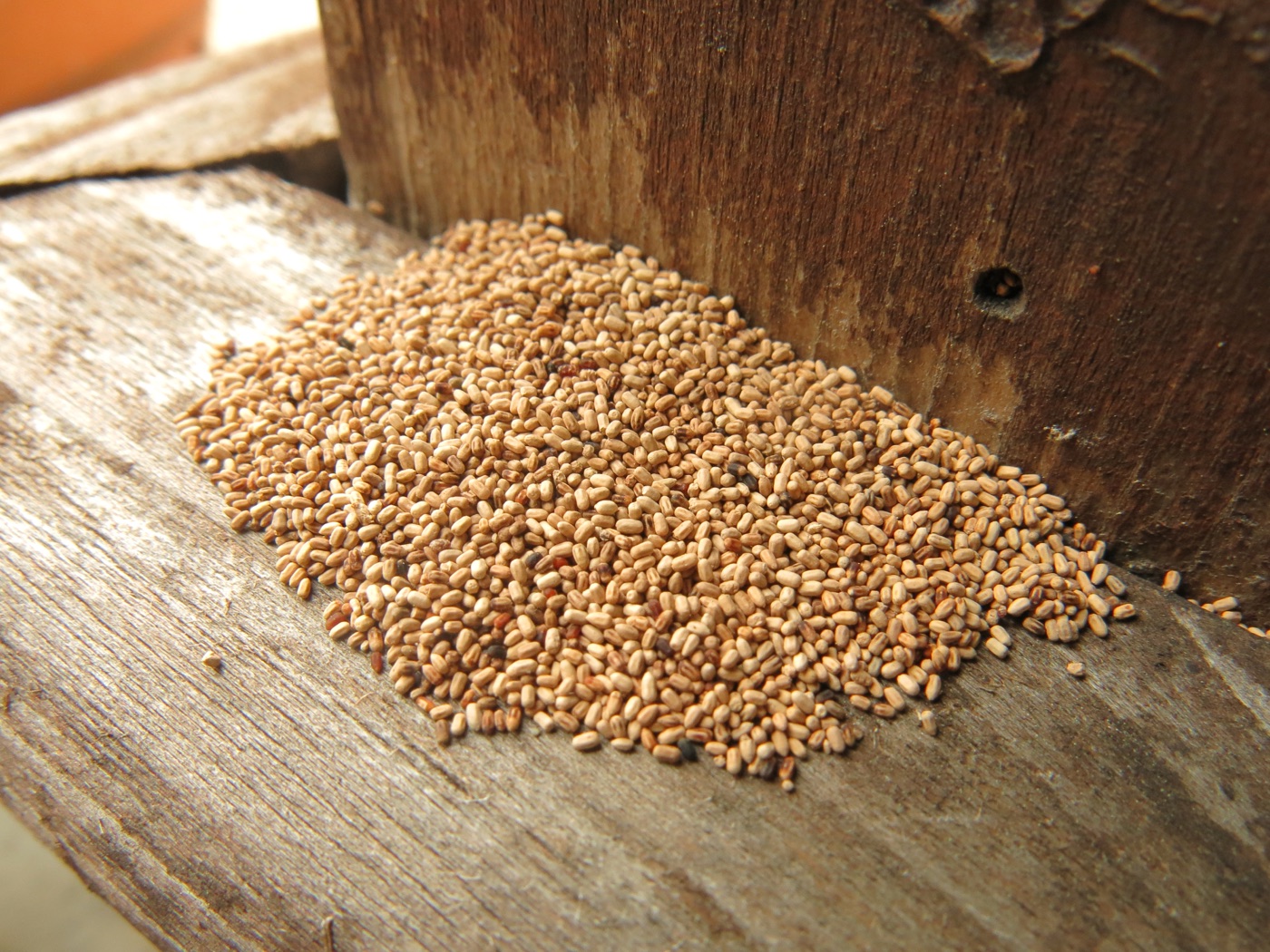

Field comparison: pellets, powder, and fibers
Utah State’s comparison describes drywood termite pellets as hard, six-sided particles about 1 mm long. The repeated shape of individual grains is the useful feature; a brown pile viewed from across a room is not enough.
Compare that with loose irregular carpenter-ant wood fragments or the fine powder associated with some powderpost beetles. A uniform rounded bead, a fluffy fiber, and a flour-like dust are different starting observations. If a phone image cannot resolve individual grains, leave the identification open and arrange inspection.
Reference: Utah State University: Carpenter Ants identification factsheet · University of Kentucky: Powderpost Beetles
Check the surrounding evidence
- Look for a small opening in wood above or near the pile, rather than relying on the color of the debris.
- Note whether similar pellets appear again after the surface has been cleared. New pellets can be useful evidence, though movement of the wood can also release old ones.
- Check nearby wood for other signs such as damage or shed wings. Avoid opening structural cavities yourself.
What else could it be?
Carpenter ants and wood-boring beetles can leave debris near wood. Their material does not have the distinctive six-sided drywood termite pellet shape.
Loose sawdust or household grit can look similar from a distance. A close-up photo with a ruler can help a qualified inspector compare it.
Start with the pile, opening, and wood as three separate clues
Take an overview that includes the floor or sill, the suspected opening, and the wood above it. Then take a closer image of the material. Give both images the same observation number. This preserves the relationship that is lost when a close-up shows only brown grains. If several openings are visible, label them separately; the nearest opening is a possibility, not a demonstrated source.
Compare texture without a household crush test
Use a photograph or an identifier’s examination to distinguish individual pellets from loose fibers or fine powder. Do not rub material between your fingers to decide what it is. Note whether the pile looks uniform or mixed. A mixed pile might contain ordinary renovation debris as well as insect evidence, so asking one label to explain every particle can be misleading.
Build a useful recurrence record
Record the date, exact shelf or board, whether the surface had previously been cleared, and any recent drilling, door slamming, furniture movement, or repairs. Use the same camera position for a later observation. This is an observation log, not a home test that certifies an active colony: old material can be displaced. A professional can interpret recurrence alongside insects and the wood itself.
Questions to put in the inspection request
Ask which evidence supports the termite identification, whether current activity was actually observed, and which areas were inaccessible. Request a distinction between the affected material and the extent that remains unknown. If treatment is proposed, ask how the recommendation follows from those findings. Keep the inspection report with your photographs so a future pile is compared with a documented baseline rather than memory.
Keep the context with the clue
Record the date, exact location, visible features, and what remains uncertain. Bring the record to a qualified identifier.
Add this finding to your evidence log →Common questions
Is termite frass the same as termite droppings?
In this guide, termite frass refers to the dry, pellet-like waste expelled by drywood termites. The terms are commonly used together, but debris from other wood pests can look different.
Do fresh pellets prove an active infestation?
A new pile is worth documenting, but UC IPM cautions that pellets alone cannot determine whether an infestation is currently active.
Are dark pellets newer than light pellets?
Color is not a dependable calendar. Record it, but do not use it to date the damage or decide whether a colony is active. The finding location, recurrence record, and inspection are more useful.
Should I fill the small hole before an inspection?
Photograph and show it to the inspector first. Covering a visible opening can make the original relationship between the wood and the pile harder to assess. Filling a hole alone does not establish that the underlying cause has been resolved.
Sources reviewed
These references support the identification notes. They do not imply that the authors have reviewed or endorsed this website.