.jpg)
Field comparison: size is useful, but not decisive
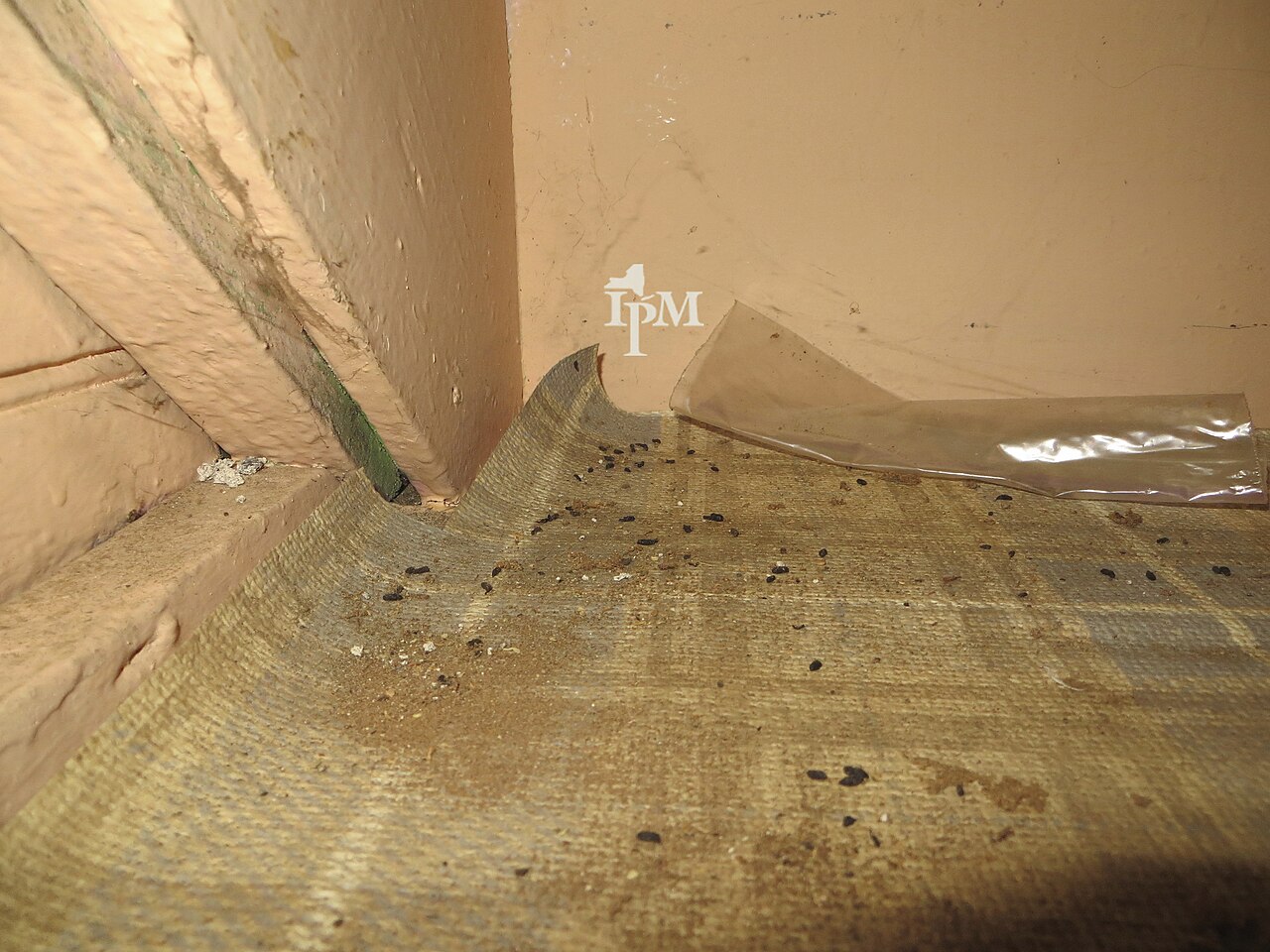
Cornell IPM gives typical mouse-dropping lengths of 1/8–1/4 inch (roughly 3–6 mm). Rodent deposits are generally cylindrical, with ends that can range from pointed to rounded. These are reference dimensions, not a reliable species cutoff for every pellet.
A smooth small pellet may fit the comparison, but a magnified photograph without scale cannot establish its size. Mixed debris, damaged material, and other animal waste can confuse the result. Treat suspected rodent waste cautiously while identification remains unresolved.
Document before cleaning
- Photograph the droppings with a size reference and note where they were found.
- Look for nearby gnaw marks or other signs, especially along walls and behind stored items.
- Do not sweep or vacuum rodent droppings. CDC warns that this can put contaminated material into the air.
Mouse or rat?
Mouse droppings are generally smaller; rat droppings vary by species and can have different end shapes.
A few pellets cannot reliably identify the species or tell you how many animals are present.
Describe the affected area before handling anything
From a clean accessible position, record the surface and approximate spread: one cabinet corner, a storage shelf, or several parts of a room. Photograph without moving waste to improve the arrangement. Include a scale only when it can be placed without contact. An overview is often more useful for a cleanup assessment than a very close photograph of one pellet.
Keep identification and safe cleanup as separate decisions
A photograph may leave the animal uncertain while still showing a reason to use rodent-waste precautions. CDC advises against dry sweeping or vacuuming and provides different instructions for materials and settings. Use that full guidance rather than a shape chart as the basis for cleanup. For extensive contamination or inaccessible spaces, seek appropriate professional advice.
Reference: CDC: How to Clean Up After Rodents
Record recurrence from a documented baseline
After appropriate cleanup, note the date, location, and what was cleaned. Photograph any later deposits in the same area and record newly observed gnawing or packaging damage separately. New waste is more informative about current presence than trying to judge a pellet’s age by color. Do not postpone necessary action just to accumulate a larger photographic record.
Prepare a focused rodent inspection brief
Include food-storage locations, visible gaps, actual animal sightings, and the waste map. Tell the professional about contaminated insulation or ventilation areas rather than attempting to reach them yourself. Ask what evidence supports the animal identification and which entry points were confirmed. A possible hole in a wall and an observed animal route should not be reported as equally certain.
Keep the context with the clue
Record the date, exact location, visible features, and what remains uncertain. Bring the record to a qualified identifier.
Add this finding to your evidence log →Common questions
Can I vacuum mouse droppings?
CDC advises against sweeping or vacuuming rodent droppings during routine cleanup because that can put contaminated material into the air. Follow its current cleanup instructions instead.
Do small droppings prove it was a mouse?
No. Size helps with comparison, but a photo of one pellet is not enough to confirm the species. Consider location, nearby signs, and a professional identification when uncertain.
Does a dry pellet mean the problem is old?
Appearance is not a dependable activity clock. A documented cleanup followed by new signs provides a clearer timeline than judging dryness or darkness in a photograph.
Should I collect droppings to improve identification?
Do not handle unknown waste merely to obtain a specimen. Start with accessible photographs and ask the receiving professional what evidence they need and how it can be provided safely.
Sources reviewed
These references support the identification notes. They do not imply that the authors have reviewed or endorsed this website.